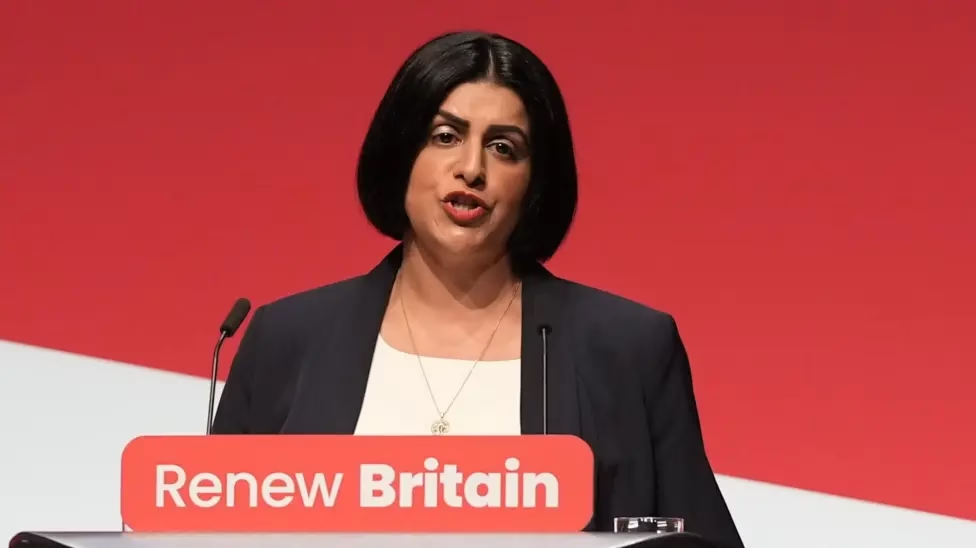
In a landmark speech at the Labour Party Conference on 29 September 2025, Home Secretary Shabana Mahmood unveiled significant reforms to the UK’s Indefinite Leave to Remain (ILR) system, introducing new conditions that migrants must meet to gain permanent settlement status.
The Core Changes: What Migrants Must Now Prove
Migrants will have to prove they are contributing to society to earn the right to remain in the UK, marking a fundamental shift in how the UK grants permanent settlement.
New Requirements for ILR
Under the proposals, legal migrants will have to learn English to a high standard, have a clean criminal record and volunteer in their community to be granted permanent settlement status.
The reforms also include additional conditions such as:
- Making National Insurance contributions
- Not taking any benefits payments
- Giving back to their communities through volunteer work
The Timeline Extension
Labour plans to double the period it takes to gain the status from five years to 10, with a consultation announced in May as part of a broader package of immigration reforms.
However, there’s a potential fast-track option: some foreign nationals could earn earlier settlement, based on their contribution or skills.
The Political Context: Labour vs Reform UK
These reforms come at a politically charged moment, with Labour drawing a clear dividing line between the government and Reform UK, which says it would abolish indefinite leave to remain.
Reform said it would replace indefinite leave to remain with visas that force migrants – including non-EU nationals who already have the status – to reapply every five years.
The clash between the two parties has intensified, with Prime Minister Sir Keir Starmer calling Reform UK’s policy “racist” and “immoral”, while Chancellor Rachel Reeves echoed his comments, stating that Reform’s policies are racist and must be called out.
Who Will Be Affected?
Migration Observatory estimates there are about 4.5 million people who hold indefinite leave to remain, including roughly 430,000 non-EU citizens.
Currently, migrants can apply for indefinite leave to remain after five years of legal residence in the UK, giving them the right to live, study and work permanently. The new system will significantly extend this waiting period while adding strict integration requirements.
The Home Secretary’s Vision
In her speech, Mahmood confirmed plans to reform indefinite leave to remain, saying the changes would “ensure contribution to this country is a condition of living here”.
The home secretary drew on her personal background, speaking about her parents’ experience of arriving in the UK, arguing the acceptance of migrants depends on their contribution to local communities.
Mahmood stated that the story of Britain’s progress as an “open, tolerant, generous place” had become contested, and warned that without addressing public concerns about immigration, working-class communities would turn away from Labour.
What This Means for Migrants
The proposed changes represent the most significant overhaul of the UK’s settlement system in a generation. For migrants currently in the UK or planning to come:
Immediate Impact: Those on the path to ILR will need to prepare for:
- Enhanced English language requirements beyond basic proficiency
- Community engagement and volunteering commitments
- A doubled waiting period from 5 to 10 years (subject to consultation)
- Stricter scrutiny of criminal records and benefit claims
Potential Benefits: High-skilled workers and those making exceptional contributions to UK society may qualify for accelerated settlement, though the specific criteria remain to be defined.
Long-term Implications: The reforms aim to emphasize integration over simple residency, requiring migrants to actively participate in British society rather than simply maintaining legal status.
Timeline and Next Steps
A consultation on these changes was announced in May 2025, with implementation details still being finalized. The government has indicated that reforms will roll out progressively, with some measures potentially coming into effect within months.
Ministers are currently working on defining what constitutes sufficient “contribution” to society and how the accelerated pathway for high-skilled workers will operate in practice.
The Broader Immigration Strategy
These ILR reforms are part of Labour’s wider immigration control strategy. Mahmood promised to “do whatever it takes to secure our borders”, addressing concerns about small boat crossings and overall immigration numbers.
The home secretary also announced a “winter of action” scheme to tackle shoplifting, with police forces working in partnership with local businesses.
Conclusion
The Labour Government’s ILR reforms represent a fundamental shift in UK immigration policy, moving from a time-based system to one centered on active contribution and integration. While designed to address public concerns about immigration and counter Reform UK’s more restrictive proposals, the changes will significantly impact millions of migrants already in the UK and those planning to settle permanently.
As the consultation process continues, migrants and immigration practitioners should stay informed about specific implementation details, particularly regarding what qualifies as sufficient “contribution” and how the accelerated pathway will function in practice.
The coming months will be crucial as the government translates these policy announcements into actionable regulations that will shape the future of UK settlement for years to come.