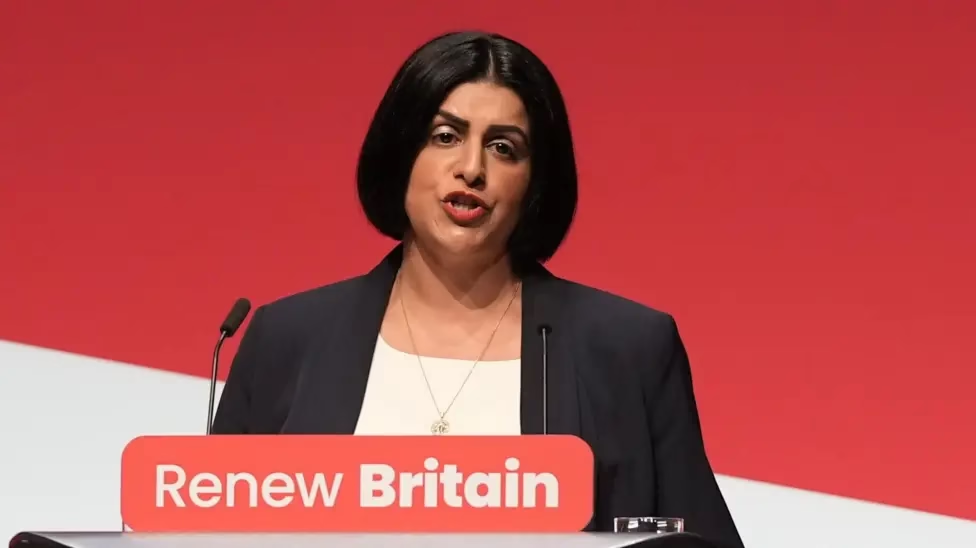
The UK government has announced the most significant overhaul to its settlement system in over a decade. In November 2025, Home Secretary Shabana Mahmood unveiled proposals that will fundamentally change how migrants earn the right to settle permanently in Britain. If you’re living in the UK on a visa or planning to move here, these changes could dramatically affect your future.
The headline change? Most migrants will now need to wait 10 years instead of 5 years before they can apply for Indefinite Leave to Remain (ILR), also known as settlement. But there’s more to it than just a longer wait time. The new “earned settlement” system introduces a points-based approach where your contributions to British society can either shorten or extend your path to permanent residency.
This comprehensive guide breaks down everything you need to know about the proposed changes, who will be affected, and what it means for your future in the UK.
What Is Earned Settlement?
Earned settlement represents a philosophical shift in how the UK approaches permanent residency. Rather than settlement being granted automatically after living in the country for a set period, the new system requires individuals to demonstrate sustained commitment through measurable contributions.
The government’s stated goal is to ensure that those granted settlement are “well-integrated, economically self-sufficient, and committed to the communities they join.” This approach aims to strengthen social cohesion and public confidence in the immigration system.
Under the current system, settlement is relatively straightforward: live in the UK for five years on an eligible visa, pass the Life in the UK test, meet English language requirements, and maintain a clean record. The new system adds layers of complexity by introducing adjustable qualifying periods based on individual circumstances.
The Four Pillars of Earned Settlement
The earned settlement framework is built on four core pillars:
1. Character
All applicants must meet mandatory suitability requirements. This includes having no criminal convictions, no current litigation or government debt (including NHS and tax debts), and no behaviour contrary to the public good.
The government plans a “root and branch review” of criminality thresholds across all immigration routes. The expectation is clear: you should not be able to settle with a criminal record. This represents a stricter approach than the current system, which allows settlement for those without prison sentences exceeding one year.
2. Integration
Applicants must demonstrate meaningful engagement with British society through:
- English Language Proficiency: The minimum requirement rises to B2 level (upper intermediate) under the Common European Framework of Reference for Languages, up from the current B1 level
- Life in the UK Test: This remains mandatory
- Community Contribution: The government is consulting on whether volunteering and community work should reduce the qualifying period
Notably, those who can demonstrate advanced English proficiency at C1 level (advanced/proficient user) may reduce their qualifying period by one year.
3. Contribution
This is perhaps the most significant pillar, focusing on economic participation. All applicants must:
- Have earned above £12,570 annually for a minimum of 3-5 years (the threshold for paying income tax and National Insurance)
- Have no outstanding debts to the government
The system rewards higher earners with reduced qualifying periods:
- Earning over £125,140 for three years: minus 7 years from the qualifying period
- Earning over £50,270 for three years: minus 5 years from the qualifying period
There are also proposed reductions for those working in specified public service occupations (like NHS doctors or teachers) for five years, recognizing that public sector pay scales may not reach the private sector thresholds.
4. Residence
Applicants must have lawful, continuous residence in the UK. However, the new system penalizes those who have breached immigration laws:
- Arriving illegally (e.g., via small boat): up to 20 additional years
- Entering on a visit visa then switching: up to 20 additional years
- Overstaying for 6+ months: up to 20 additional years
- Claiming public funds for under 12 months: plus 5 years
- Claiming public funds for over 12 months: plus 10 years
Who Will Be Most Affected?
Health and Care Workers
Between 2022 and 2024, 616,000 individuals arrived on Health and Care visas. Over half were dependants rather than workers. The government forecasts that 384,000 settlement applications from this cohort will come between 2027 and 2029, with a peak of 210,000 in 2028.
Many Health and Care workers earn below the proposed threshold for accelerated settlement. Senior care workers and care workers had median salaries between £23,000 and £26,000 in 2023/24, well below the UK median of £37,000. The consultation proposes that those who worked in occupations below RQF Level 6 (degree level) should face a 15-year baseline qualifying period instead of 10 years.
This would represent a dramatic shift for care sector workers, tripling their current five-year route to settlement.
Skilled Workers
The 344,000 Skilled Worker visas granted between 2022 and 2024 will also face the new rules. Those in roles below degree level (RQF 6) may face the 15-year pathway. However, higher earners and those in RQF 6+ roles could potentially reduce their qualifying period through the contribution criteria.
From 2024 onwards, the minimum salary threshold for Skilled Workers increased to £38,700, and from 2025, the skills threshold returned to RQF 6+, closing routes for lower-skilled occupations. These changes mean future cohorts will differ significantly from recent arrivals.
International Students and Graduate Route Holders
Students don’t have a direct path to settlement on their study visa. They typically need to switch to another route like Skilled Worker. Between 2021 and 2024, only 11% of those granted settlement initially came to the UK to study, but this may increase due to the Graduate Route introduced in 2021.
The Graduate Route allows students to stay for two years (three for PhD graduates) after completing their degree without employer sponsorship. This increases opportunities to secure a job leading to settlement, though time on the Graduate Route doesn’t count toward the five-year requirement—only the ten-year Long Residence route.
Family Visa Holders
Those on family visas as partners of British citizens or settled persons will largely be protected from the extended timeline. The proposals include a five-year reduction for applicants who are dependants of British citizens, meaning they’ll retain the current five-year pathway.
However, the Minimum Income Requirement for family visas increased from £18,600 to £29,000 in April 2024, and around 280,000 migrants could settle between 2026-2030 who arrived before this increase took effect.
Refugees and Asylum Seekers
Perhaps the most dramatic change affects refugees. The baseline qualifying period for those recognized as refugees will be 20 years, double the proposed standard 10-year period. However, resettled refugees—those who arrive through official resettlement programs—will start at 10 years, aligning them with other planned migration routes.
The government justifies this distinction by arguing that resettlement program caps are designed to reflect local capacity to absorb new arrivals.
Protected Groups and Exemptions
Not everyone will face the full force of these changes:
British National (Overseas) Visa Holders
Hong Kong BN(O) visa holders will retain their five-year path to settlement (a five-year reduction from the 10-year baseline). The government recognizes the significant contributions Hong Kongers have made and will continue to make to the UK. Between 2021 and 2022, 154,000 people were granted BN(O) visas, and 92,000 are forecast to apply for settlement in 2026 alone.
Global Talent and Innovator Founders
Those on high-value routes designed to attract “the brightest and best” will continue to enjoy accelerated pathways:
- Global Talent and Innovator Founder visa holders with three years continuous residence: minus 7 years (meaning a three-year pathway)
- The consultation asks whether their dependants should also receive a five-year reduction
HM Armed Forces
The government is committed to at least maintaining current arrangements for Armed Forces members under the Armed Forces Covenant. Currently, those who complete the minimum term of service (four years) or who are medically discharged can apply for settlement immediately, as can their immediate family members.
Vulnerable Groups
Certain vulnerable groups are proposed to retain their current arrangements:
- Victims of domestic violence and abuse (immediate settlement)
- Bereaved partners (immediate settlement)
- Adults with long-term care needs joining relatives in the UK
- Children and young adults who grew up in the UK without immigration status
The Settlement Surge: Why These Changes Are Happening Now
The timing of these reforms is no coincidence. Between 2021 and 2024, net migration added 2.6 million people to the UK population—roughly one in every 30 people currently in the country arrived during these four years.
The government forecasts that between 1.3 and 2.2 million people will settle between 2026 and 2030, with a peak of around 450,000 in 2028. This would be nearly double the previous peak of 250,000 settlement grants in 2010.
Three factors drive this unprecedented surge:
- Hong Kong BN(O) arrivals becoming eligible in 2026-2027
- Health and Care visa holders (616,000 between 2022-2024) becoming eligible 2027-2029
- Skilled Worker visa holders (344,000 between 2022-2024) becoming eligible 2027-2029
Home Secretary Shabana Mahmood described the previous system as an “extraordinary open border experiment” that was “destabilising.” The new earned settlement system represents an attempt to regain control while maintaining pathways for those who contribute most.
The Fiscal Argument
The government consultation includes detailed analysis of the fiscal impact of different migrant groups. The Office for Budget Responsibility estimates that:
- “High-wage” migrants (earning 30% above UK average, approximately £49,700) make substantial positive fiscal contributions
- “Average-wage” migrants (around £38,200) make modest positive contributions over their lifetime
- “Low-wage” migrants (50% below average, approximately £19,100) never make a net positive fiscal contribution
Care workers and their dependants, with median salaries between £23,000-£26,000, fall below the average-wage category but above the low-wage category. The government argues they make less of a contribution than higher-skilled migrants, particularly when factoring in dependants.
From 2021-2024, 27% of Health and Care visa applications were for children under 16, compared to 18% for other Skilled Worker visas. Migrant households with children incur significantly higher levels of public spending in the short term, requiring substantially higher earnings to make a net positive fiscal contribution.
The consultation also notes that in June 2025, 213,000 migrants with settlement were claiming Universal Credit, highlighting concerns about long-term costs once migrants become eligible for public funds.
Settlement and Access to Public Funds
One of the most controversial proposals asks whether settled status should continue to grant automatic access to public funds, or whether this should be reserved for British citizens only.
Currently, once someone obtains ILR, they can access benefits including Universal Credit, housing assistance, and eventually the state pension. The consultation proposes potentially maintaining “No Recourse to Public Funds” (NRPF) conditions even after settlement, shifting the default access to benefits to citizenship rather than settlement.
This would represent a fundamental change to what settlement means. For decades, ILR has been understood as a status that grants rights comparable to citizenship except for voting and passport benefits. Removing access to the social safety net would create a new tier in the immigration system.
What About Dependants and Children?
The treatment of dependants under earned settlement remains somewhat uncertain and is subject to consultation feedback.
Adult Dependants
Currently, dependants of economic migrants can settle at the same time as the main applicant without meeting additional conditions. The proposals change this dramatically: adult dependants will need to earn settlement in their own right based on their individual circumstances.
This means a care worker’s spouse might settle at a different time—potentially years earlier or later—depending on their own earnings, contributions, and circumstances. The only guarantee is that dependants cannot settle if the main applicant fails to qualify.
Children
The government acknowledges that children cannot meet requirements like paying National Insurance Contributions. The proposals include:
- A “window” during which children admitted as dependants under 18 can settle with their parents
- A potential age cut-off after which young adults must follow their own route to settlement
- Exemptions from employment-related requirements for those admitted as dependants under 18
The consultation specifically notes that children in care and care leavers are excluded from these questions and will be subject to separate targeted engagement.
Transitional Arrangements: The Biggest Question
Perhaps the most significant question in the consultation is whether there will be any transitional arrangements for people already in the UK on the pathway to settlement.
The consultation asks respondents whether they agree that “there should not be transitional arrangements for those already on a pathway to settlement.”
The Home Secretary’s foreword is explicit: “We propose to apply these changes to everyone in the country today who has not already received indefinite leave to remain. This would mean that those who are due to reach settlement in the coming months and years would be subject to the new requirements for earned settlement, as soon as our immigration rules have changed.”
However, she also states: “We will not, and would never, take away settled status from those who have already been granted it.”
This means:
- If you already have ILR, you’re protected
- If you’re on a visa expecting to apply for ILR in 2026-2028, you may face the new rules
- If you entered the UK in 2023 expecting a five-year route, you might now face a 10 or even 15-year pathway
This retroactive application has significant implications for life planning, including employment decisions, family formation, and financial planning. Many migrants made life choices based on a five-year timeline that may no longer apply.
Timeline: When Will These Changes Take Effect?
The consultation runs for 12 weeks from November 2025 to 12 February 2026. After analyzing responses and publishing impact assessments, the government will announce its final policy.
Immigration Rules can be changed relatively quickly—they don’t require primary legislation, only Parliamentary scrutiny. Changes could potentially take effect in 2026, though this timeline may slip into 2027 depending on the complexity of implementation.
Changes to citizenship requirements will require primary legislation (amendments to the British Nationality Act 1981) and will therefore take longer.
What Should You Do Now?
If you’re currently in the UK on a visa route leading to settlement, consider:
- Respond to the consultation: The government is seeking views from affected individuals. Your experience matters.
- Document everything: Keep meticulous records of earnings, tax payments, volunteering, community involvement, and any other evidence that might demonstrate contribution and integration.
- Consider timing: If you’re close to the five-year mark, you might want to apply for settlement sooner rather than later, though there’s no guarantee the old rules will still apply.
- Review your finances: Ensure you have no government debts and understand whether you’ve claimed any public funds that might affect your application.
- Seek professional advice: Immigration law is complex, and these changes add new layers of complexity. A qualified immigration solicitor can help you understand your specific situation.
- Improve your English: If you can reach C1 level, this could reduce your qualifying period by a year.
- Track your earnings: If you’re on track to earn above the threshold amounts, document this carefully as it could significantly reduce your waiting time.
The Broader Picture: Integration vs. Exclusion
The earned settlement proposals raise fundamental questions about what it means to build a life in Britain and who gets to become permanently part of British society.
Supporters argue the system rewards contribution, encourages integration, and ensures migrants are economically self-sufficient. They point to the fiscal pressures of unprecedented immigration levels and the need for public confidence in the system.
Critics worry the changes create a multi-tiered society where your pathway to permanent belonging depends on your salary. They argue care workers, who provide essential services often under difficult conditions, deserve better than a 15-year wait. They question whether retrospectively changing the rules for people already here breaches an implicit promise made when visas were granted.
The Home Secretary’s foreword acknowledges these tensions. As the daughter of immigrants who came to Britain in the 1970s seeking a better life, she frames the changes as necessary to ensure “migration still works for this country” and to maintain Britain’s position as “the greatest multi-ethnic, multi-faith democracy in the world.”
Whether these reforms achieve that goal or undermine it will depend on the final details and how they’re implemented. One thing is certain: for hundreds of thousands of people already in the UK and millions more who might come in future, the path to calling Britain home permanently just got longer and more complicated.
Key Takeaways
- The baseline qualifying period for most migrants increases from 5 to 10 years
- Higher earners can reduce their qualifying period; lower earners may face 15 years
- Those who breach immigration rules or claim benefits face additional penalties
- Hong Kong BN(O) holders, British citizen dependants, and high-value route holders largely protected
- Refugees face a 20-year baseline (resettled refugees: 10 years)
- Changes may apply to everyone not yet settled, with no transitional arrangements
- The consultation closes 12 February 2026
- Implementation could begin in 2026 or 2027
The earned settlement system represents the most significant change to UK immigration policy in a generation. As the consultation proceeds and details are finalized, the implications will become clearer. What’s already clear is that the assumptions thousands of migrants made about their future in Britain are being fundamentally challenged.
Stay informed, engage with the consultation if you’re affected, and seek professional guidance to navigate what promises to be a complex new landscape for anyone seeking to make the UK their permanent home.




2 thoughts on “UK Earned Settlement 2025: Everything You Need to Know About the New 10-Year Path to Indefinite Leave to Remain”
Lakiwinph is pretty good, have a lot of fun games they are quick to load and the support is pretty decent too. Recommend giving Lakiwinph a shot! lakiwinph
A significant overhaul indeed – the 10-year path to settlement is a big change to be aware of. I also found some interesting related discussion on https://tinyfun.io/game/travel-story-match while researching this.